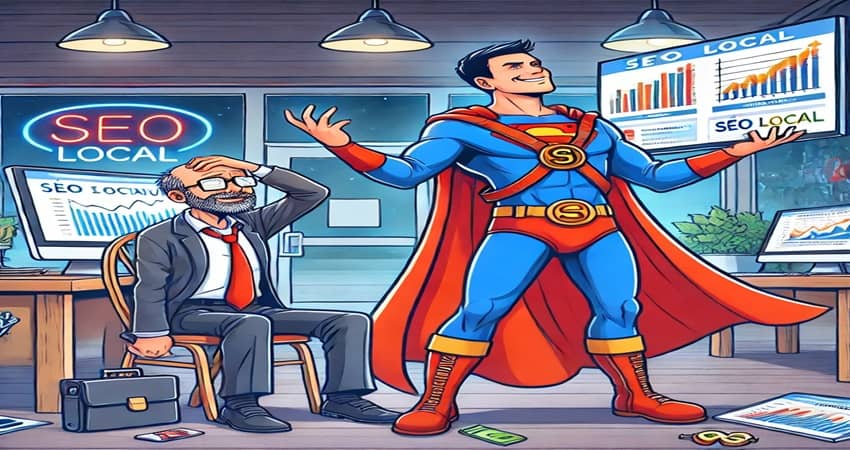
If potential customers can’t find your business online, it’s likely because you haven’t yet implemented the right local SEO strategies.
Local SEO is one of the most effective ways to increase your visibility in a specific geographic area. When properly optimized, your business can appear at the top of Google Search and Google Maps results whenever local customers search for products or services you offer.
Here’s how you can improve your SEO with local SEO and attract more qualified customers.
Optimize Your Google Business Profile
A fully optimized Google Business Profile is essential for ranking in Google’s Local Pack.
To maximize your visibility:
- Create and verify your Google Business Profile.
- Complete every section with accurate business information, including your business name, address, phone number, website, and opening hours.
- Upload high-quality photos regularly.
- Encourage satisfied customers to leave reviews and respond to every review professionally.
- Include relevant local keywords naturally in your business description.
Improve your local visibility – Check out my Google My Business SEO services!
Optimize Your Website for Local SEO
Your website plays a crucial role in your local search performance.
Use Local Keywords
Research keywords that include your city, region, or service area.
Optimize your:
- Page titles
- Meta descriptions
- H1 and H2 headings
- URLs
- Image alt text
- Website content
Write naturally while including local search terms throughout your pages.
Create Location-Specific Pages
If you serve multiple cities or regions, create dedicated landing pages for each location.
Each page should include:
- Unique content
- Local services
- Customer testimonials
- Maps
- Contact information
- FAQs specific to that location
Avoid duplicate content across location pages.
Improve Internal Linking
Connect related pages using descriptive anchor text.
For example:
- Link service pages to location pages.
- Link blog posts to your main services.
- Link related local content together.
A strong internal linking structure helps both users and search engines navigate your website.
Improve User Experience (UX)
Google rewards websites that provide an excellent user experience.
Focus on improving:
Website Speed
Fast-loading websites improve rankings and conversions.
Optimize by:
- Compressing images.
Enabling browser caching.
Minifying CSS and JavaScript.
Removing unnecessary plugins and scripts.
Mobile Optimization
Google primarily indexes the mobile version of your website.
Ensure your site:
- Is fully responsive.
Loads quickly on smartphones.
Uses readable fonts.
Has clickable buttons with enough spacing.
Visitors should quickly find the information they need.
Use:
- Clear navigation menus.
Logical page hierarchy.
Internal links.
Strong call-to-action buttons.
Fix Broken Pages
404 errors create a poor user experience and may negatively impact your SEO.
Regularly audit your website to identify broken links and redirect outdated pages to relevant content.
Build High-Quality Local Backlinks
Local backlinks remain one of the strongest ranking factors.
Earn links by:
- Submitting your business to reputable local directories.
- Partnering with local businesses.
- Collaborating with bloggers and local news websites.
- Sponsoring community events.
- Joining local business associations.
Quality always matters more than quantity.
Leverage Social Media
While social media signals are not direct ranking factors, they help strengthen your online visibility.
Maintain active profiles on:
- TikTok
- YouTube
Share:
- Local news
- Customer success stories
- Educational content
- Business updates
- Community events
Use local hashtags and location tags whenever appropriate.
Manage Customer Reviews
Online reviews strongly influence local rankings and customer trust.
Best practices include:
- Asking satisfied customers for reviews.
- Responding to every review promptly.
- Addressing negative feedback professionally.
- Encouraging detailed customer experiences rather than generic comments.
Consistent review generation sends positive trust signals to Google.
Publish Local Content
Content marketing remains a powerful local SEO strategy.
Create articles about:
- Local events
- Community news
- Industry updates
- Local guides
- Frequently asked questions
- Customer case studies
Fresh, locally relevant content helps attract organic traffic and demonstrates expertise.
Use Local Structured Data
Implement Local Business Schema markup on your website.
Structured data helps search engines understand:
- Business name
Address
Phone number
Opening hours
Services
Reviews
Geographic location
This can improve your visibility in rich search results.
Monitor Your Local SEO Performance
Track your progress regularly using tools such as:
- Google Analytics
- Google Search Console
- Google Business Profile Insights
- Ahrefs
- SEMrush
- Moz
Monitor:
- Organic traffic
- Local keyword rankings
- Google Maps visibility
- Click-through rate (CTR)
- Customer calls
- Direction requests
- Website conversions
Use the data to continually improve your local SEO strategy.
Final Thoughts
Effective local SEO relies on a multi-faceted approach: Google Business Profile optimization, on-page SEO, local backlinks, review management, and social media activity.
By implementing these strategies, you can significantly improve your visibility and attract more customers in your local area.
At SeoYass, as a local SEO consultant, I help you strengthen your online presence and outperform your competition.




0 Comments